Welcome back!
Ready to check out?
You're just one click away from fantastic style and even better savings!
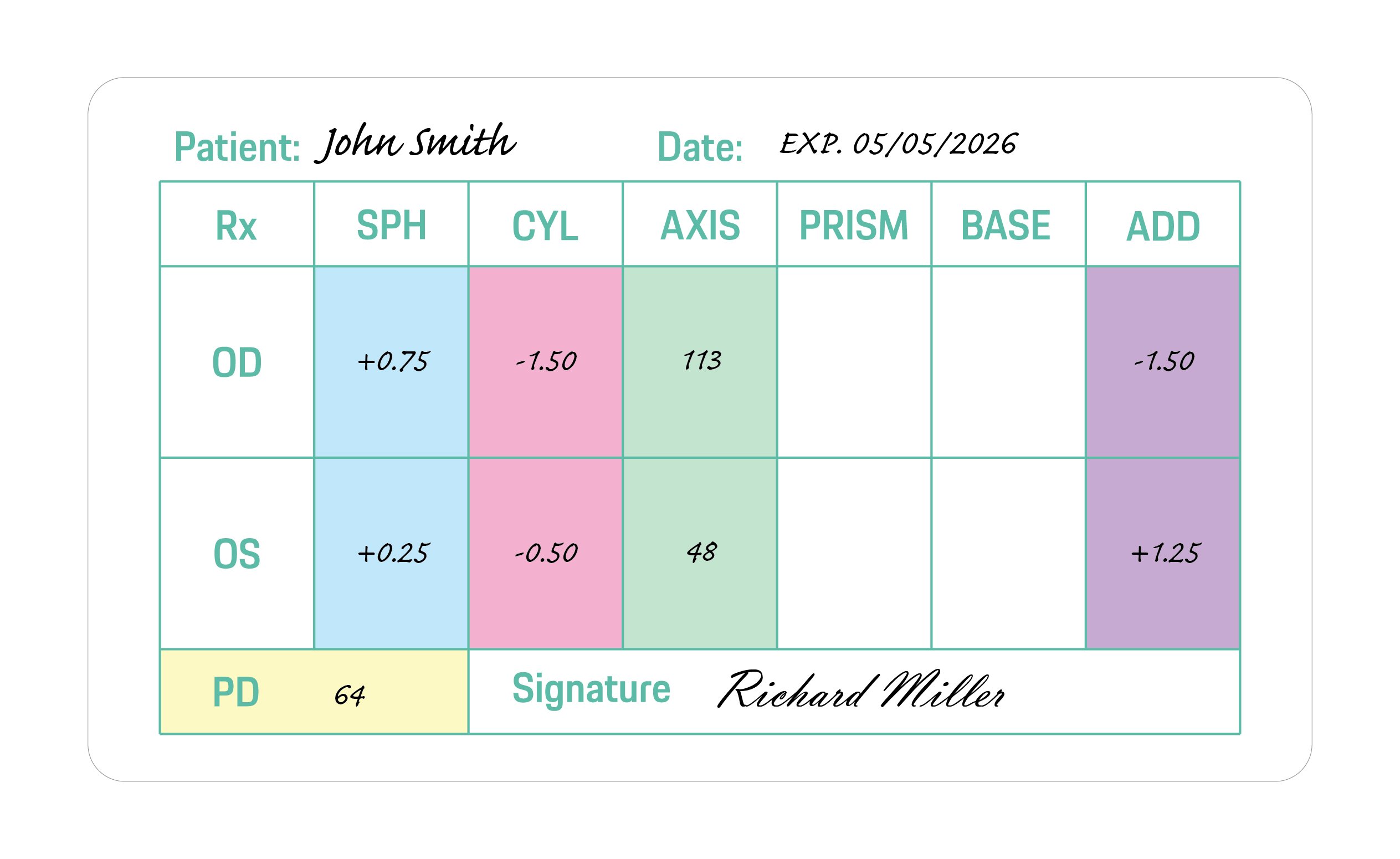
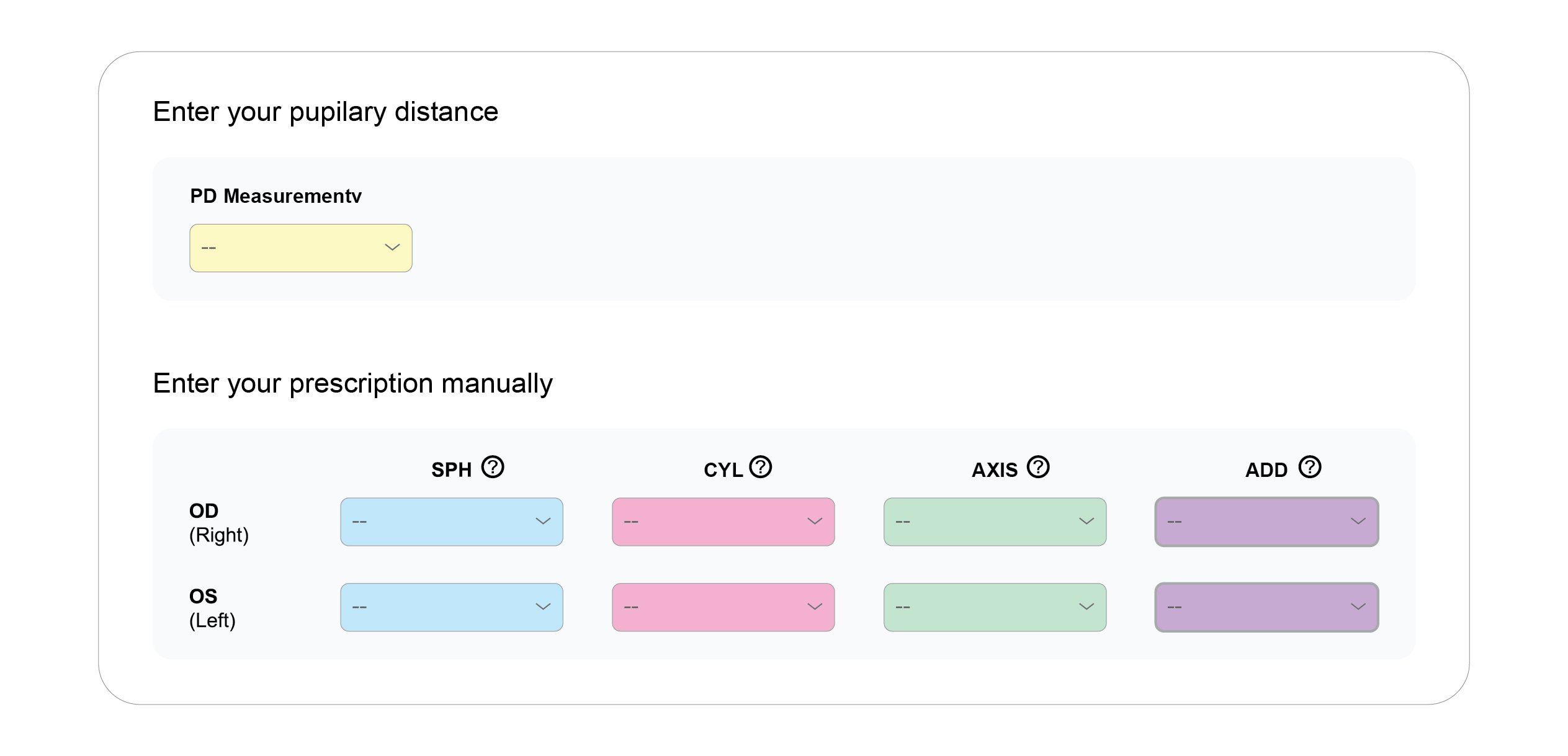
OD is an abbreviation for the Latin term oculus dexter which means right eye. Notice that the right eye information is asked for first even though we typically read from left to right.
OS is an abbreviation of the Latin oculus sinister which means left eye. That will be referenced on the far right column of the prescription.
SPH is short for sphere. The sphere of your prescription indicates the power on the lenses that is needed to see clearly. A plus (+) symbol indicates the eyeglass wearer is farsighted. A minus (-) symbol indicates that the eyeglass wearer is nearsighted.
CYL is short for cylinder. The cylinder indicates the lens power necessary to correct astigmatism. If the column has no value (is blank), it indicates that the eyeglass wearer does not have astigmatism. If this is the case on your prescription, you can leave it blank when entering it in.
AXIS is a prescription will include an axis value for those with astigmatism. This number represents the angle of the lens that shouldn't feature a cylinder power to help correct your astigmatism.
ADD is short for "additional correction." This is where details about bifocals, multifocal lenses or progressive lenses would appear.
This article explores the authentic rhythms of an Indian woman’s life—from the sacred rituals of the morning to the professional ambitions of the afternoon, and the familial negotiations of the evening. The Sacred Morning (Saatvik Lifestyle) For a vast majority of Indian women, the day begins before sunrise. This isn’t merely about productivity; it is rooted in the Ayurvedic concept of Brahma Muhurta (the time of creation). The lifestyle is deeply spiritual. The first action is often lighting a lamp ( diya ) before the household altar ( mandir ). This act is believed to dispel ignorance and invite prosperity.
However, the last three decades have seen a seismic shift. Economic liberalization in 1991 created jobs in cities, pulling young couples away from ancestral homes. Today’s Indian woman—especially in tech, medicine, or finance—often lives in a nuclear setup.
India is a land of paradoxes. It is the only major civilization where the feminine divine— Shakti (power) and Devi (goddess)—is worshipped alongside masculine gods, yet the lived reality for many Indian women has historically been shaped by patriarchal structures. To understand the today, one must look through a prism of ancient traditions, colonial history, post-independence reform, and rapid digital globalization. This article explores the authentic rhythms of an
Introduction: The Land of the Feminine Divine
The government's massive distribution of subsidized sanitary pads and the movie Pad Man (based on Arunachalam Muruganantham) have normalized conversation. However, a silent revolution is the use of menstrual cups and period panties among Gen Z Indian women, who reject both the environmental waste of plastic pads and the shame of hiding the product in a black polythene bag. Mental Health: The Last Frontier Unlike the West, mental health in India carries a heavy stigma. A depressed Indian woman is often told she is "weak" or "possessed by an evil eye." The lifestyle is deeply spiritual
A massive cultural trend is the revival of handloom saris on Instagram. Young women are rejecting cheap polyester and embracing Kanjivaram or Maheshwari weaves, pairing them with crop tops and sneakers. This is "aesthetic activism"—preserving dying arts while looking fashionable.
In 2025, the average Indian woman does not want to be a "Devi" (goddess) on a pedestal, nor a "Dasi" (servant) in the corner. She wants the freedom to choose—whether that means becoming a CEO, a stay-at-home mom, or a spiritual ascetic. She is learning to demand pleasure in marriage, discussion in family, and safety on the street. However, the last three decades have seen a seismic shift
The lifestyle of an Indian woman is not monolithic. It varies drastically between the snow-capped mountains of Kashmir and the backwaters of Kerala, between the bustling chawls (apartment blocks) of Mumbai and the orderly high-rise apartments of Gurugram. However, common threads of resilience, familial duty, faith, and an evolving sense of independence weave through the fabric of their daily existence.
*Discount applied on the current website price at the time of order. Offer only valid for new customer first contacts order over $10. Maximum discount of $100. Cannot be combined with any other offers. Promotions are subject to change without notice. We reserve the right to cancel orders that are in breach of the terms and conditions of this offer.



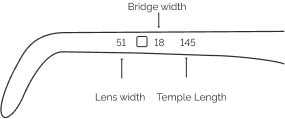
| Lens Width | Bridge Width | Temple Length | |
|---|---|---|---|
| XS | < 42 mm | < 16 mm | <=128 mm |
| S | 42 mm - 48 mm | 16 mm - 17 mm | 128 mm - 134 mm |
| M | 49 mm - 52 mm | 18 mm - 19 mm | 135 mm - 141 mm |
| L | >52 mm | >19 mm | >= 141 mm |
Buying eyewear should leave you happy and good-looking. Use our sizing tool to find frames that best fit your unique facial measurements.
Grab a regular card with a magnetic stripe on the back. Student IDs, credit cards and gift cards work well to start our online PD tool.
You may have received our paper PD measurement tool in your recent online order. In order to use this tool, place the ruler on your eyes so that the "0" lines up at the centre in between your eyes. Add up the two numbers, to get your PD. See example below:
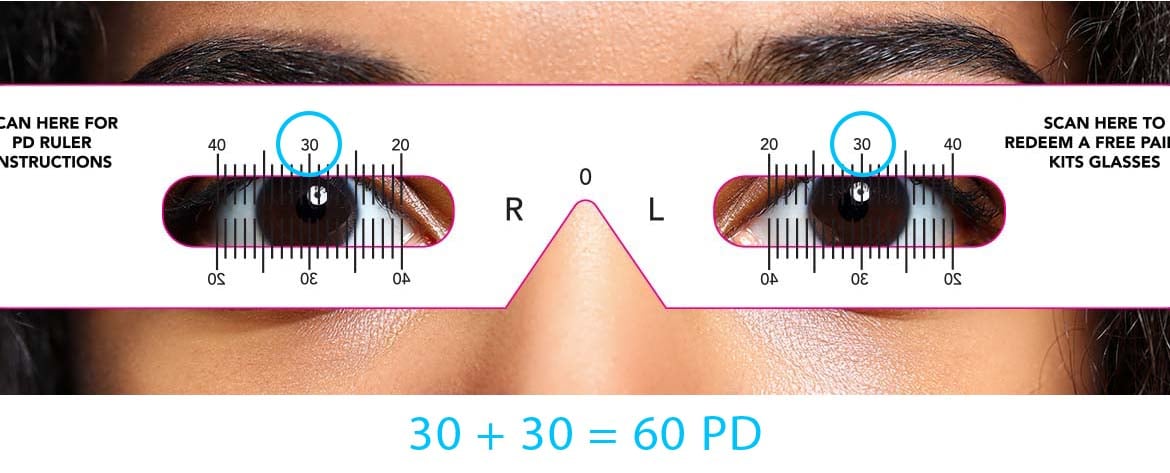
Click on this link to download and print your own PD measurement tool.
DOWNLOAD



 Check order status
 Place reorder
 Chat with us





 Use your insurance
 Help
Help