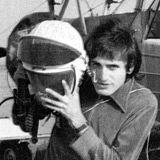
AUTOR IZ DAVNOG VREMENA KADA JE PISAO SVOJU PRVU KNJIGU „KRILATA KATEDRA”...
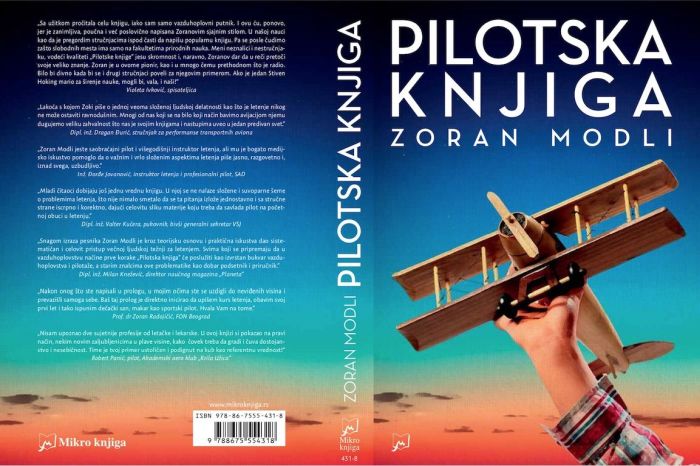
Poput mnogih drugih, tako je i Zoran Modli rođen sredinom prošlog veka u Zemunu i za sada je živ i zdrav. Nije odmah postao pilot. Najpre je kao odlikaš završio osnovnu školu, a onda alarmantno srozao uspeh u Prvoj zemunskoj gimnaziji. Od mature se oporavio u redakciji „Politike ekspres”, a sa dvadesetak godina proslavio kao revolucionarni disk-džokej Studija B i legendarne zemunske diskoteke „Sinagoga”. Studio B je, posle pet godina, napustio iz više razloga, a najviše zbog letenja. Od tada je jednom nogom u raznim radijima, a drugom i obema rukama u avijaciji. Pošto je bliska rodbina, a naročito najbliža – majka – očekivala da završi kakav-takav fakultet, uradio je pola posla, pa završio Višu vazduhoplovnu pilotsku školu u Beogradu.
Kao instruktor letenja, najpre na sportskim aerodromima, a zatim u Pilotskoj akademiji JAT u Vršcu, školovao je na desetine naših i stranih pilota. Mnogi od njih odavno su kapetani JAT-a, ali i drugih kompanija širom sveta. Dvadeset godina je leteo u JAT-u, a najviše vremena proveo na nikad prežaljenom boingu 727, nad kojim lamentira kad god mu se za to pruži prilika. Od ranih devedesetih pa sve do prvog poglavlja ove knjige leteo je i kao kapetan na biznis-džetovima kompanije Prince Aviation. Za njim su bezbrojni sati sjajnih iskustava. Poslednje je bilo loše, ali korisno za ovu knjigu.
Živi u Beogradu, a u mislima u svim onim gradovima na čije je aerodrome sletao.

... I U OVA NOVA VREMENA, DOK OČEKUJE NOVO IZDANJE „PILOTSKE KNJIGE“.
When you sit in a modern IMAX theater and feel the floor shake during a Christopher Nolan explosion or the silent vastness of a Denis Villeneuve landscape, you are witnessing a paradox. You are looking at the past and the future simultaneously.
As long as directors chase the look of reality, not the reality of pixels, the whir of the laser scanner will continue to breathe life into the world’s largest frames. What is an IMAX film scan? Discover the 8K laser technology, workflow, costs ($172k per reel), and color science behind digitizing 15-perf/70mm IMAX negatives for modern cinema. imax film scan
While many assume digital cameras rule the box office, the "Holy Grail" of image quality remains —specifically, the massive 15-perf/65mm negative. But celluloid is useless without a digital bridge. That bridge is the IMAX film scan . When you sit in a modern IMAX theater
This article dives deep into the technical specifications, the workflow, the cost, and the art of the . Part 1: The Physical Source – Why Size Matters Before discussing the scan, we must respect the source. Standard 35mm film has a frame area of roughly 1.1 square inches. An IMAX frame (15-perforations wide) measures approximately 2.75 inches by 2.07 inches. That is roughly 10 times larger than standard 35mm film. What is an IMAX film scan
But when you sit in row H, center seat, and you see the sky in Interstellar —that depth, that texture, the way the highlights roll off like honey instead of clipping to harsh white—you are seeing the ghost of the photon that hit the celluloid, preserved by an .
IMAX film scan, 70mm scanning, film restoration, 8K scan, photochemical post-production, IMAX negative digitization.
Producers are now shooting digital, printing the digital file onto IMAX film (a film recorder), then re-scanning that film back to digital. Why? To add the gate weave, the halation, and the grain texture of IMAX. It is the analog warmth plugin, done physically.